Southland Ecological Restoration Network

Southland Ecological Restoration Network

A Network of Southland Community Conservation Projects

  • Home
  • Project Directory
  • Organisations
  • Events
  • News
  • About
  • Links
  • Contact

Events

July • Sherwood Forest

Past events

Trip to Covenants and Limestone Bluffs

17 January 2009

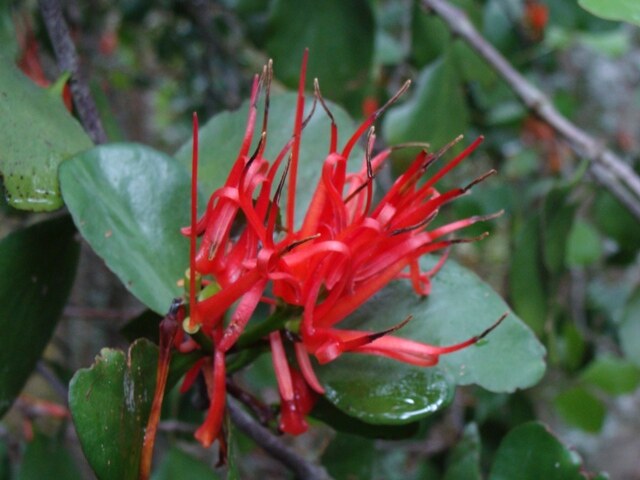
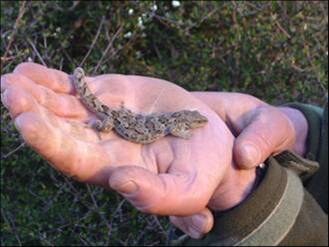
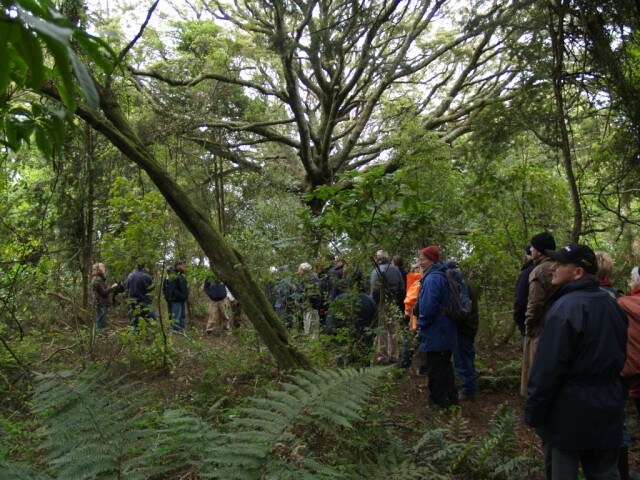
Visit Warwick Day’s Covenant at South Hillend, Limestone Bluffs at Dipton and Collies Covenant. A group of 14 set off in a forecast of hail showers to Warwick and Wendy Day’s farm in the Taringatura Hills. We climbed aboard 4wd trailers and truck to the high points of the farm where Warwick explained his farming philosophy based on a “love of nature”. Consequently their farm has great variety with productive areas, lots of shelter for animals, covenanted areas of tussock, wetland and rocky outcrops where geckos can be seen (though none today unfortunately). Then on to a higher point where we had a good view of Warwicks largest created lake - one of 30-40 wetland areas on the property. The lake was full of moulting paradise ducks with a few scaup or diving ducks also seen. On the drive home we admired extensive native and exotic shelterbelts. It is heartening to see that productive farming can go hand in hand with nature. Warwick then took us to see some magnificent scarlet mistletoes flowering on his brother Malcolm’s farm – the beech forest there is also protected under a QEII Covenant.

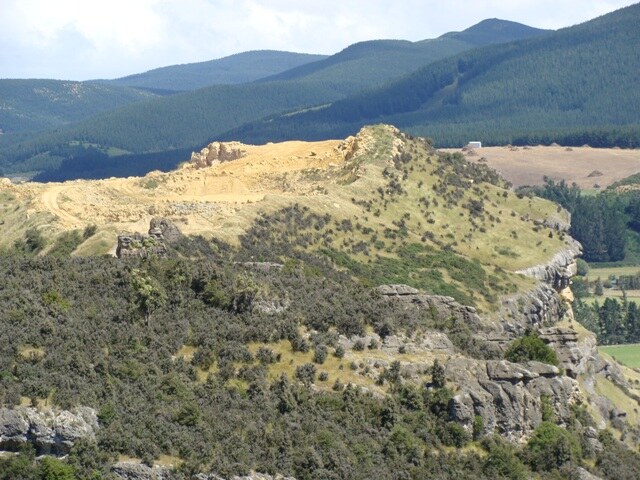
Lunchstop was in Steven and Belinda Clearwater’s garden - where the sun blazed down on us. As we ate, Steven and Belinda told the story of the Castlerock Limestone feature which is on their farm. Despite the fact that as landowners they wish to protect this iconic landscape, a historic mining licence prevents such protection. The Clearwater’s and many locals and interested people have rallied to publicise the destruction of the top of the limestone feature by mining company Ravensdown and it is hoped that such publicity will eventually stop the destruction of this nationally important geological feature. The Clearwater’s are cautiously optimistic about the future protection of the outcrop - but are not “popping the champagne just yet” - Steven said. After lunch we walked to the top of the limestone bluffs and right across the top, overlooking the quarry. The Clearwater’s have made a track through the tangly shrubs of Coprosma, Raukaua and Corokia. Earlier Brian Rance had spoken about the rare shrub Teucridium which grows on the outcrop and we observed the tiny mistletoes growing on the shrubs. Also seen was a New Zealand falcon which is nesting on the bluffs.

A final destination was Collies covenant where a large gully of native vegetation had been fenced off from stock and protected – right under the Bastion – an impressive landmark feature of this area. We arrived home to Invercargill to be greeted by a very impressive rainstorm accompanied by thunder and lightening!

All aboard for a tour of the Day's farm.
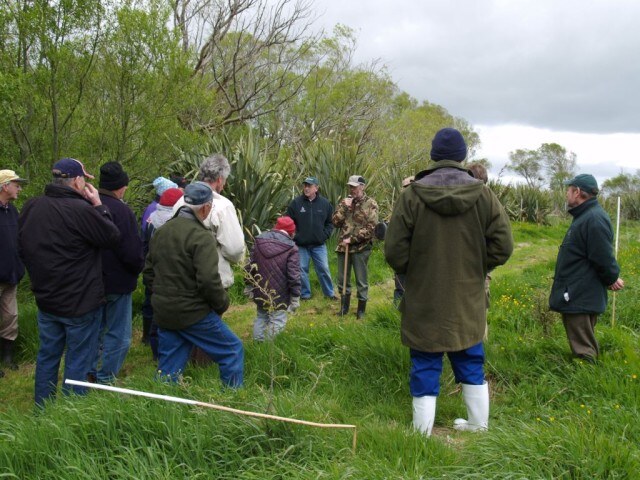
Warwick explaining to Forest and Birders the constuction of the biggest wetland on their farm.
Warwick Day and son admiring the scarlet mistletoe.
The impressive flowering display of a rare mistletoe on Malcolm Days Property January 2009.
Castlerock Limestone feature on Clearwaters farm January 2009.
Sheryll Ashton and Belinda Clearwater looking at the destruction of the top of the limestone feature January 2009.
Castlerock limestone quarry from the top of the cliff January 2009.
View from the top of the Castlerock limestone January 2009.
Gecko seen at Warwick Days Covenan during a previous visit.

Strictly for the Birds

22 November 2008

Native birds in your area and how to encourage them into your patch. An Open Day at the Southland Community Nursery in Otatara at the weekend proved a great success with over 50 people attending in just 2 hours. The open afternoon was a joint affair with Russel and May Evans “Bush Haven” - where people got to look at the range of injured native birds that are being cared for. The Community Nursery is a voluntary native plant project run by Chris and Brian Rance where people can come to the nursery on Fridays, help with potting plants or weeding and in exchange take away some native plants for their own projects, for free.

The theme for this years open afternoon was to encourage people to grow the local native plants that will attract tui, bellbirds, native pigeons and other birds to their properties. The native fuchsia - Fuchsia excorticata - is one of the main local native trees that is excellent for attracting the nectar feeding birds tui and bellbird for long periods of the year. Although not as large flowered as some of the exotic fuchsia’s they have abundant flowers that are available for most of the growing season - they also produce large fruit which those birds and pigeon and waxeyes really love. A list of other native plants good for attracting native birds is available from the nursery. Attendees also enjoyed walking the gravelled track around the Rance’s ponds and restoration area where a wet sheep paddock has been transformed into a thriving native landscape. A a good range of bush birds are attracted to the area as well as waterfowl, kingfishers, white faced herons and even the rare fernbird. Many native plants are in full flower at the moment so birds are abundant around the property.

Other important aspects to the open afternoon were advice on pest plants with Environment Southlands Randall Milne giving out the popular Southland “Plant Me Instead” guide - a free booklet which profiles some of the weeds people may have in their gardens and recommends some good species to replace them with. Also, pest trapping advice was available from Environment Southland’s Sherman Smith who is available to help landowners who want to protect and enhance bird populations in their area by controlling stoats, weasels, rats and possums. All of these animals are known to eat bird chicks and eggs on their nests as well as killing adult birds. Information is available from Environment Southland or the Community Nursery.

The Southland Community Nursery is a happening place and if you want to join in - please contact Chris (phone 2131161 or email [Enable JavaScript to view protected content]) and come along on a Friday to make the most of free advice, information, native plants and friendly community contacts.

Tui on kowhai September 2008 Photo taken from lounge window at Rances Otatara.
Kereru photo taken in September 2008 from lounge window at Rances Otatara.

SERN Spring Field Day 2008

9 November 2008

The Waiau Catchment – Restoration from top to bottom. A bus load of restoration enthusiasts from various backgrounds - Forest & Bird, Men of the Trees, Hokonui Runaka, NZTCV, QEII National Trust, SIT Pestbusters and SERN associates, enjoyed a day of ecological enlightenment. The road to Manapouri took us past the Castledown limestone formation where the concern about the change to the south face was discussed in passing.

Once in Manapouri, we ventured down the hill to admire the work of the Weedbusters, hard at it clearing an area of weeds and replanting. Photos of before and after at Frasers Beach showed the extent of the work this group has undertaken. The lunchtime stop saw us addressed by Mark Sutton, Waiau Fisheries and Wildlife Habitat Enhancement Trust, at their major project, the Rakatu Wetlands. A walk to the top of the scarp to the lookout provided a great overview of the extensive open water wetland complex that has been developed here, which in a short time has become a major eel fishery. Other native fish also abound, along with many species of waterfowl. 

Further south we visited the Dodd’s farm at Papatotara. Graeme and Dot won the Ballance Farm Environment Awards in 2007 and it is easy to see why. They have large areas of forest and manuka shrubland protected under QEII National Trust Covenant, which they are actively managing. In the past year they have trapped over 100 stoats from the area, and they are enjoying the rise in bird life as a result. As well as this they are undertaking Darwin’s barberry control where that weed has got in around the forest edges. Their streams are fenced and recently, working with Biodiversity Southland to gain assistance from the Biodiversity Condition Fund, they have been planting the riparian strip out with natives.

The final stop for the day was looking over the Te Wae Wae Lagoon and the lower Waiau floodplain. This area of pastoral land is owned by Meridian and the Waiau Trust now has the lease. Over the last few years there have been ponds created acorss this flat to see how well the area might be used by whitebait species. There has been a good response by the Galaxids and others, with the ponds having high numbers of fish in them. With the success of this work, the Waiau Trust is moving forward to create large water bodies in this lower floodplain and this coming summer a start will be made on this work to create a major fishery. This will in some part compensate for the loss of habitat that occurred when the mighty Waiau River was beheaded at the time of the Manapouri power station being built.

Many thanks to NZERN for their sponsorship of the bus for the day.

Sern Waiau Trip Nov 2008 Cathrine Brimcombe explains the range of weeds that have been removed from the lakeshore.
Sern Waiau Trip Nov 2008 - Catherine explains the weedbusters project on the Manapouri lakeshore.
Sern Waiau Trip Nov 2008 Woody Weed and Ted Ramsey.
Sern Waiau Trip Nov 2008 Mark Sutton explains about the open water wetlands created at Rakatu Wetlands.
Sern Waiau Trip Nov 2008 Rakatu Wetlands Mark Sutton showing the wetland from the inteterpretation shelter.
Sern Waiau Trip Nov 2008 Graham and Dot Dodds show a fine example of productive farming and conservation with bush protection, covenants, riparian protection.
Sern Waiau Trip Nov 2008 Mark showing the new Waiau Trust project to create whitebait spawning sites at the Waiau River mouth.

NZERN Spring Field Day 2007

8 November 2007

Bus Trip up the Lower Mataura Valley. The stops included O’Neills Bush, Titiroa; Wyndham Wildlife Refuge; Tuturau Memorial; Mataura River; Hokonui Runanga Marae & Wetland; Borthwick’s, Waitane.

O'Neills Bush, Titiroa. This small forest remnant on Environment Southland's lease land, has been restored as a community partnership project with local schools.
Environment Southland's Biosecurity Officer, Randall Milne explaining the ongoing weed control programme at O'Neills Bush.
Wyndham Wildlife Refuge. Wyndham Community Board member, Alan Leitch explaining the restoration process which will see the removal of willows and the return of natives.
Mataura River Mataitai. Hokonui Runanga member, Rodney Trainor explaining the research that's going on into the health of the Mataura River.
Signs just above the bridge in Mataura explain the mataitai and history of the Mataura Falls.

NZERN Spring Field Day 2006

11 November 2006

Bus Trip to Central & Northern Southland. The stops included Kowhai Reach; Glenure Reserve; Kingston Wetland.

Kowhai Reach, Kauana. The NZERN visitors were greeted by the Limehills School pupils who depicted the history of their special place.
A plaque was unveiled in memory of two of the main drivers in the protection of Kowhai Reach, landowner John Beck and QEII Rep Roger Sutton.
A kowhai tree was planted in memorial to Roger Sutton, who propagated many kowhai for planting back into the Reach.
Glenure Reserve. Willy Solomon tells about the early days of restoration when he was involved as a teacher at the Balfour School.
Kingston. The wetland along the hill face just beyond the Kingston Flyer terminal is an ongoing project for Dusty Coleman and his fellow Community Board members.
Prev page
Page 41 of 42
Next page

© 2026 • Website by RS

Our Supporters

Invercargill City Council Environment Southland Department of Conservation Forest and Bird Southland Community Nursery
  • Home
  • Project Directory
  • Organisations
  • Events
  • News
  • About
  • Links
  • Contact