Southland Ecological Restoration Network

Southland Ecological Restoration Network

A Network of Southland Community Conservation Projects

  • Home
  • Project Directory
  • Organisations
  • Events
  • News
  • About
  • Links
  • Contact

News

July • Sherwood Forest

Our Local Conservation Star - Catriona Gower

Many of us know Catriona Gower well through her work as a Biodiversity Officer with Environment Southland. However as well as this wonderful mahi, she was recently acknowledged for all the volunteer hours she puts into other conservation education and restoration projects. As a member of the South Otago branch of Forest and Bird, she was recognised by a 2026 Forest & Bird Tī Kōuka Award at the national Forest and Bird AGM.

From the ODT: ‘Affectionately known as the ‘‘Bat Lady’’, Mrs Gower set up a long-term pekapeka-tou-roa/long-tailed bat survey programme in the Catlins alongside popular bat walks. The Catlins Bat Project, established in 2014, consisted of transect surveys and year-round bat activity monitoring across the district and popular annual summer bat evenings. She was the driving force behind Long Yellow Ribbon, a riparian revegetation project — the ribbons being the kōwhai and ribbonwood trees that once were a feature along the Owaka River. She grew hundreds of seedlings and organised working bees to plant them along the river margins as well as successfully encouraging local farmers to get involved in the riparian planting.

Recently, she organised Kiwi Conservation Club activities, including two art exhibitions, ‘‘On the Brink’’ and ‘‘Art at the Nuggets’’, and the Matuku Muster — searching for bitterns.

A citation for the award said Mrs Gower was always looking for an opportunity to advocate for nature and encouraging people to enjoy being in te taiao (the natural world). Mrs Gower frequently organises fun community events focusing on enjoying Catlins wildlife and habitats. She also promotes the South Otago branch’s work in a local quarterly newsletter and includes a note on a ‘‘weed of the season’’ each time.’

Our SERN team is very grateful to have Catriona on board, always providing enthusiasm and support for what we are doing. No doubt many involved in the restoration projects registered on SERN can identify with this. Thank you and congratulations, Catriona.

Posted on: Monday, 29 June 2026

Update from Mid-Dome Wilding Trees Trust

The Mid Dome Trust finally got a funding boost as announced by the Government on 24 May. While final allocation decisions have yet to be made it is hoped that the Mid Dome programme will have it’s current budget increased by a factor of two or more. That will enable the programme to catch up on two years of severe underfunding and then proceed toward completion by 2033 if optimum funding can be maintained until then.

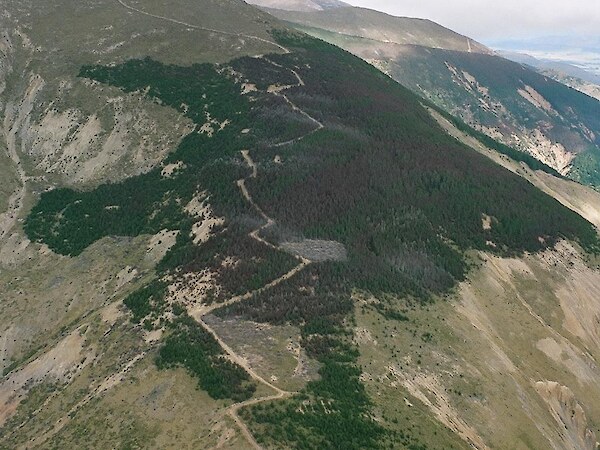
The Mid Dome Trust was formed in August 2006 and will celebrate its 20th anniversary at the Wilding Pine Network Conference in Invercargill on 11 August. It has been a remarkably successful community-led group in Southland. Through a close partnership with Environment Southland, Department of Conservation, Land Information New Zealand and the Ministry of Primary Industries, it has undertaken a highly effective collaborative work programme. Initially this contained the spread of wilding Pinus contorta and P mugo from Mid Dome to an area of 70,000 ha. Initially control was done on scattered spread east of the Mataura River. This allowed management responsibility for any residual risk over 40,000 ha of cleared land to be handed back to the landowners. The next priority was to remove the high-altitude seed sources from the Mid Dome area, including the original soil conservation plantings. Over 1000 ha of dense seed source trees have been sprayed or cut and now the focus is on mopping up the remaining seed sources and taking out any regrowth over an area of 20,000ha. A review of the programme strategy in 2023 showed that it was over halfway to completion. $20 M had been spent achieving this and a similar amount would be needed until 2033 to complete the programme. It is hoped that the latest Government funding and other policy initiatives will allow this to be done. Doing so will protect hundreds of thousands of hectares of land east of Mid Dome in Northern Southland and West Otago from becoming wilding pine forests (a graphic example below). These would prevent pastoral farming, displace native biodiversity, as well as reduce water yield in upper catchments and greatly increase the risk of landscape scale wild fires. Removing this threat will save ratepayers and taxpayers hundreds of millions of dollars in the long term.

The Mid Dome Trust clearly shows how effective local community-based groups can be at taking on even large and very daunting environmental problems. Much of the credit for this at Mid Dome must go to the Trusts Chair Ali Ballantine and her team of dedicated Trustees who have worked tirelessly to stop the wilding spread from there over the last two decades.

Posted on: Saturday, 20 June 2026

Menzies Students Lend a Hand for Local Wildlife

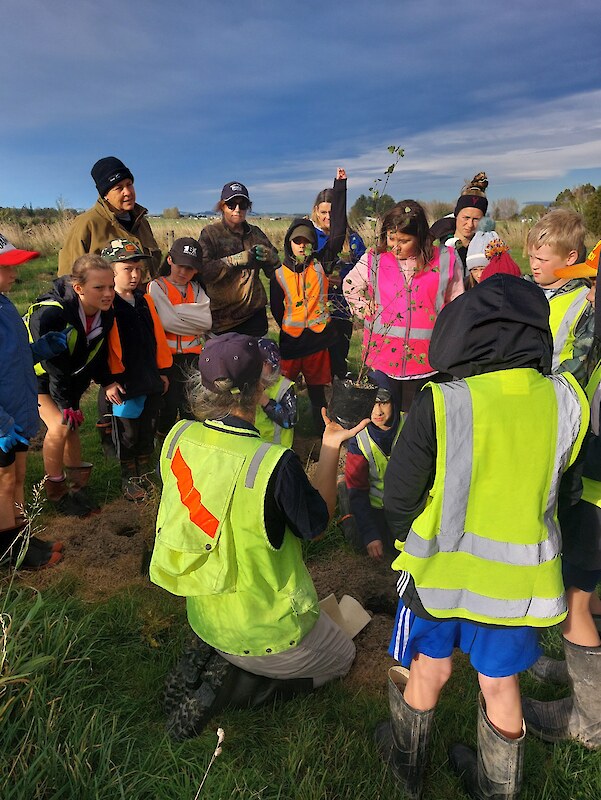
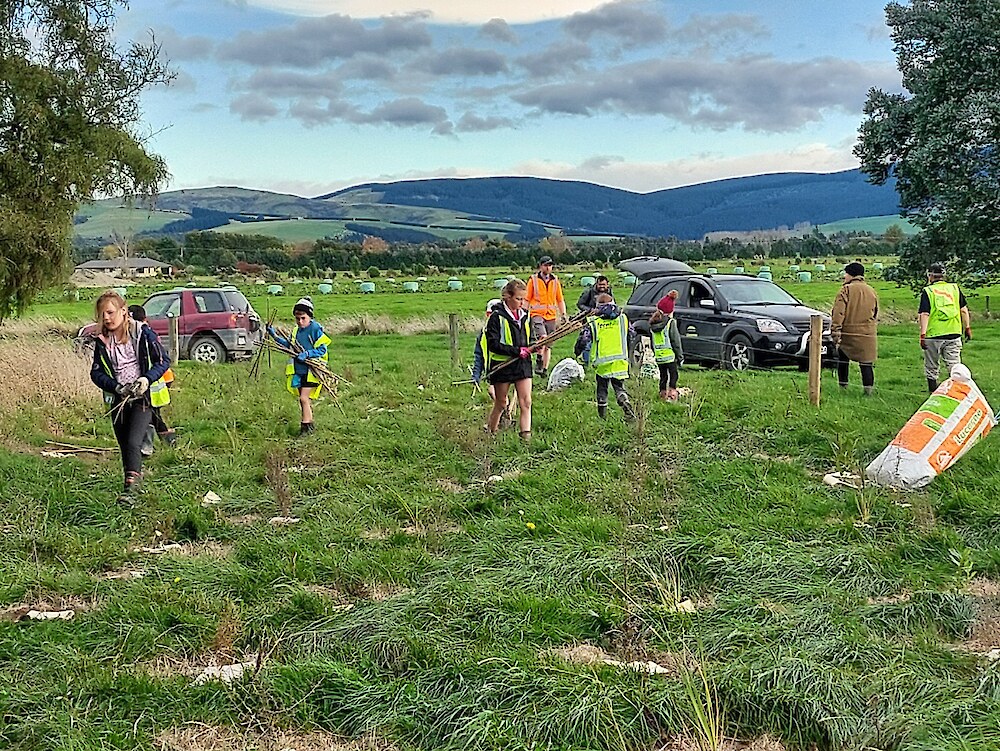
On Friday 22 May, a group of senior students from Menzies College rolled up their sleeves to support a community planting day along a stream that feeds into the Wyndham Wildlife Refuge oxbow.

Organised by the Three Rivers Catchment Group, with support from Thriving Southland, the day brought together young people, local landowners, and environmental champions working towards a shared goal. Funding for the project was provided by Environment Southland and the Mataura Catchment Liaison Committee through the Mataura Catchment Group Grant.

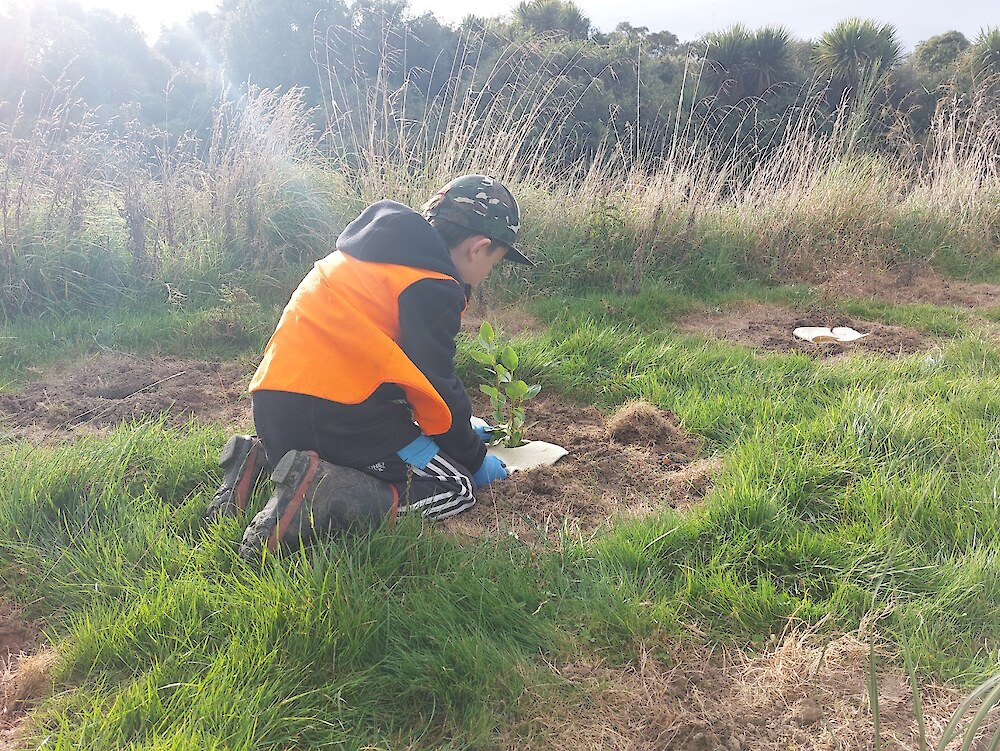
The stream is an important home for native species, including the threatened giant kōkopu and native eels. By planting carex and flax, the group has helped improve the habitat for these taonga species, while keeping flood protection measures in place. Additional plantings, such as cabbage trees, will also help encourage birdlife back into the area over time.

Projects like this highlight what can be achieved when the community comes together. A big thank you goes to landowner Dave Diprose, Anastazia Raymond (Environment Southland Land Sustainability Officer), and Tess Miller (Thriving Southland) for their support and guidance in making the day such a success.

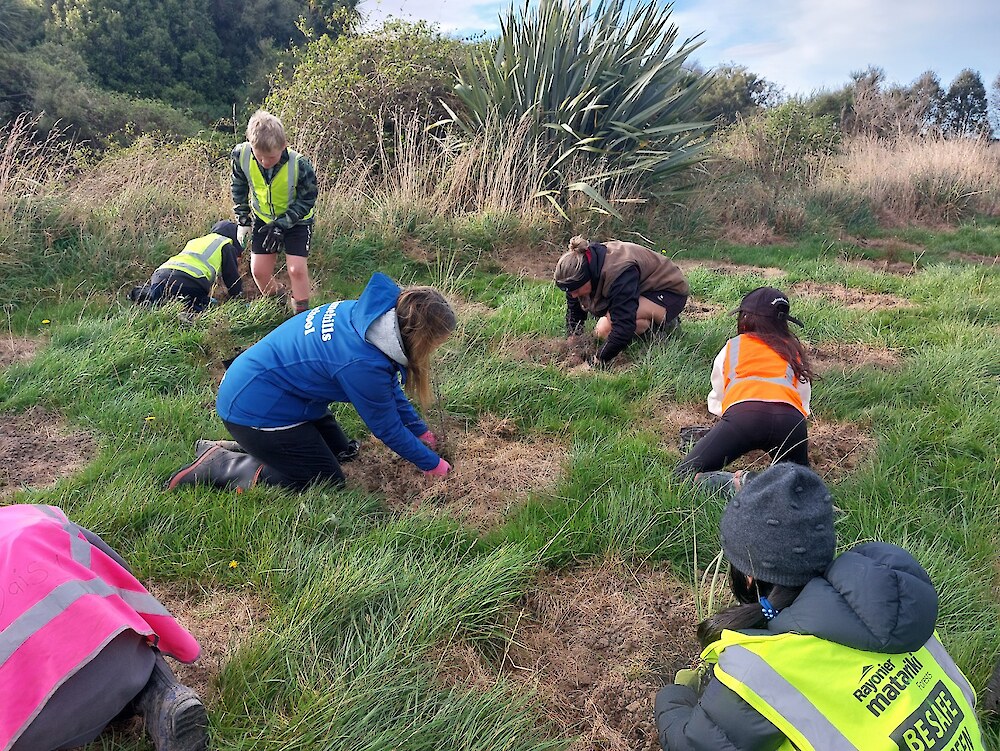
2026 May. Menzies College students help plant native wetland plants in a restoration project at the entrance to Wyndham.
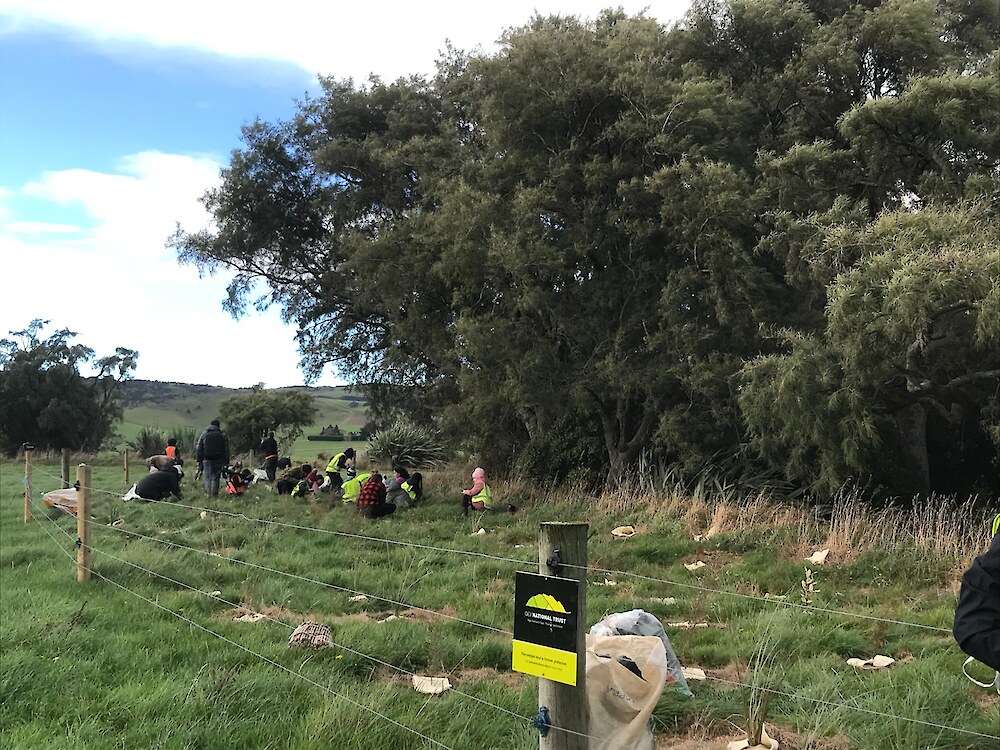
2026 May. Plants were protected by a plastic surround, held in place by bamboo stakes.

Posted on: Monday, 25 May 2026

Thomsons Bush Looking Healthier

Our SERN Autumn Field Trip was to Invercargill’s significant forest remnant, Thomsons Bush. There’s been various groups working on improving the health of this area for decades now, however two years ago the Friends of Thomsons Bush group was set up, under the leadership of Judy Fotheringham, and they have taken on removing weeds from the area with a vengeance! On the day of our visit, we were shown the areas where they have worked on removal of ivy, cutting and pasting blackberry, drilling and filling willows, holly, elderberry, barberry and spindleberry. With ivy, the work is generally pulling and removing, with ICC helping to clear the material away. However on large trees, where the ivy trunk can be up to 3cms thick, they cut and paste with glyphosate gel. You can see 300 year old kahikatea with ivy climbing up into the canopy, a constant source of seed and reinvasion, now dead from the FoTB teams work. As well as this all too important weed control, the group are also replanting the cleared areas, to ensure it’s natives that come back, rather than more weeds. It is a battle, but they are winning! The ongoing animal pest control done by a contractor and organised by ICC is ensuring the ongoing health of the seedlings that are coming back naturally and also the plantings being done. Friends of Thomsons Bush have a Management Agreement with ICC and are very appreciative of the help they recieve from them. They have also had funding assistance to buy tools and chemical from the Ron Greenwood Fund and Environment Southland’s Environmental Enhancement Fund, for which they are grateful. The FoTB have a regular Wednesday morning working bee. If you’re interested in getting involved, check this project out here for contact details.

The Thompsons Bush group, from left - Judy, Steve, Izzy, Pam, and SERN visitor Jenny.
A 300 year old kahikatea with ivy growing up to the canopy, now dying following control work.
Large ivy stems on kahikatea cut and pasted both sides with glyphosate gel.
Willow drilled and filled with glyphosate. Spindleberry behind also dealt to this way.
The FoTB team replacing weeds with native seedlings. Further weed control will be necessary, but in time the natives will dominate.
Holly drilled and filled. Smaller saplings cut and pasted with glyphosate gel, and cut material removed as holly can reroot if left on ground.
Aluminium weed sprayed with glyphosate with cooking oil added. Not effective kill with just glyphosate.
With the help of two SERN visitors, the FoTB removed another 5 fadges of ivy.

Posted on: Tuesday, 14 April 2026

DOC Funds Available for Restoration Groups

The DOC Community Fund is now open for applications to support community-led conservation projects on public and private land.

$9.2 million is available for community-led projects protecting our most threatened species and ecosystems.

Community groups play a pivotal role in protecting our native species and their habitats.

By drawing on the strengths and resources of these groups - like volunteer hours, expertise, or co-funding - we can amplify the positive change they create.

The DOC Community Fund is open for applications until 5 pm Thursday 30 April 2026.

More information: www.doc.govt.nz/DOC-community-fund

Posted on: Friday, 3 April 2026

Prev page
Page 1 of 30
Next page
Revegetation of a grass area at the beginning of the track, ten years on. 2006.

Bushy Point Gambles, Otatara

Edge of the flaxland

Castle Downs (Dipton) Wetlands

Southland Forest and Bird monthly outing included the first plantings at their Waipapa Point restoration site. February 2011.

Waipapa Point Coastal Restoration Project

Volunteers take a well earned rest at end of the day. 2006.

Pomona Island Restoration Project

© 2026 • Website by RS

Our Supporters

Invercargill City Council Environment Southland Department of Conservation Forest and Bird Southland Community Nursery
  • Home
  • Project Directory
  • Organisations
  • Events
  • News
  • About
  • Links
  • Contact